How to Use POS System in a Restaurant: A Complete Guide for Success
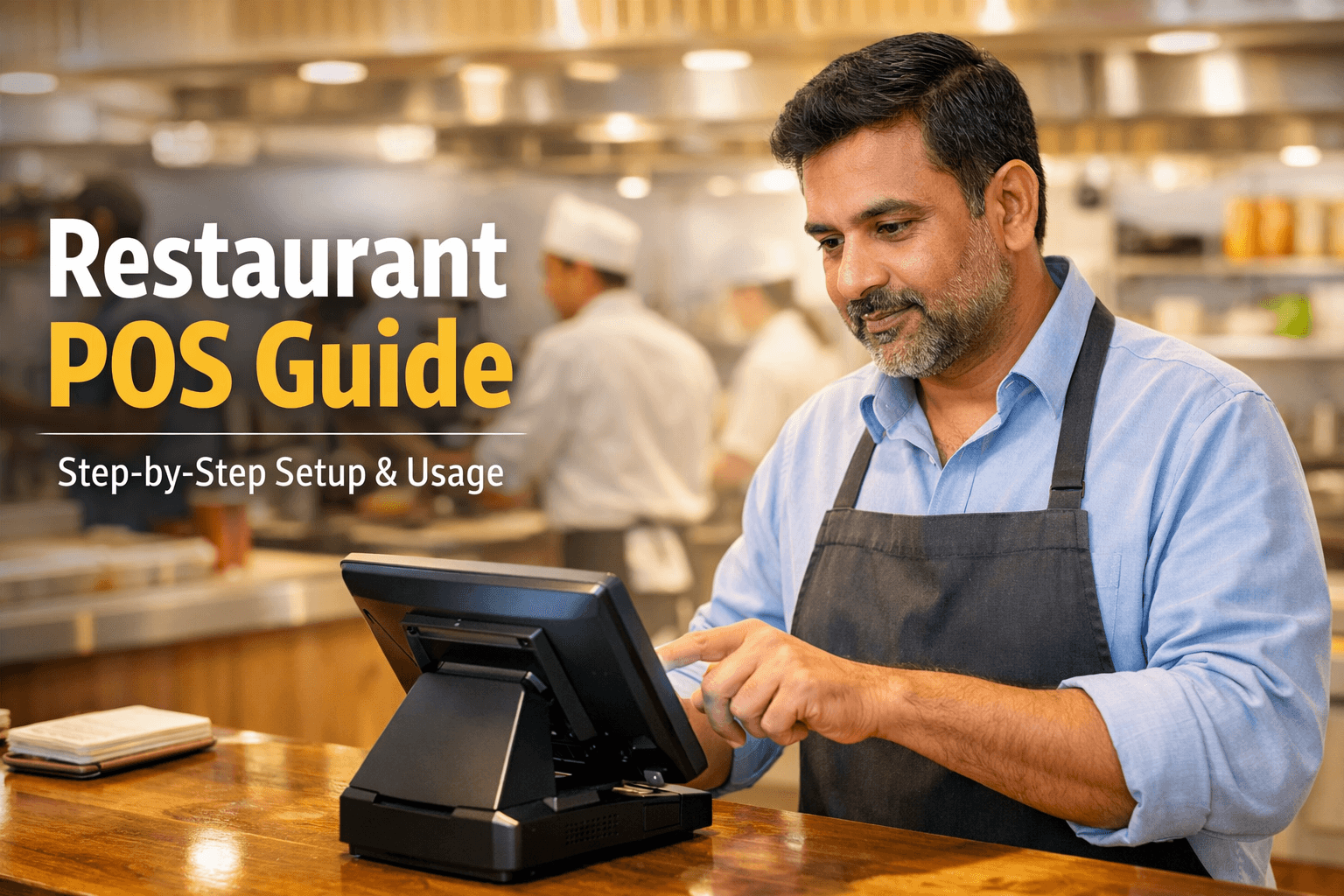
Running a restaurant efficiently requires more than great food and service. Managing orders, billing, kitchen coordination, inventory, and staff can become complicated without the right technology. This is where a Restaurant POS System becomes essential.
In this guide, we explain what is pos system for restaurant, how it works, and how restaurant owners can use it effectively to streamline operations, improve customer experience, and grow their business.
What is POS System for Restaurant?
A POS (Point of Sale) system for restaurant is a digital system that helps restaurants manage sales transactions, orders, payments, and operations from a single platform.
Instead of manual billing or handwritten orders, a Restaurant POS System allows restaurants to:
- Take customer orders digitally
- Send orders directly to the kitchen
- Process payments quickly
- Track inventory automatically
- Generate detailed sales reports
In simple terms, a restaurant POS system acts as the central management system for restaurant operations.
Modern POS systems connect the billing counter, kitchen, inventory, staff management, and reporting dashboards, making restaurant operations faster and more accurate.
Why Every Restaurant Needs a POS System
Restaurants deal with multiple orders, busy kitchen operations, and complex menus. Without a proper system, mistakes and delays can occur frequently. Using a Restaurant POS System offers several benefits.
- Faster Order Processing : Staff can quickly enter orders into the system, which are instantly sent to the kitchen.
- Improved Accuracy : Digital order entry eliminates confusion caused by handwritten orders.
- Better Inventory Control : The system automatically tracks ingredients used in each dish.
- Real-Time Sales Tracking : Restaurant owners can monitor daily revenue and business performance instantly.
- Enhanced Customer Experience : Faster service and accurate billing improve customer satisfaction.
For modern restaurants, using a Restaurant POS System is no longer optional—it is a necessity for efficient operations.
How to Use POS System in a Restaurant
Using a Restaurant POS System effectively involves setting up the system correctly and training staff to use it efficiently.
Below is a step-by-step guide.
1. Set Up the Digital Menu
The first step in using a POS system is creating a digital version of your restaurant menu.
You can organize menu items into categories such as:
- Starters
- Main course
- Beverages
- Desserts
Each item includes:
- Price
- Modifiers (extra toppings, spice level, add-ons)
- Variations (size, portion)
A properly structured menu allows staff to quickly take orders using the POS interface.
2. Configure Table Management
For dine-in restaurants, table management is an important feature.
A Restaurant POS System allows you to:
- Create a digital layout of restaurant tables
- Assign orders to specific tables
- Track table occupancy in real time
This helps restaurants manage seating efficiently during busy hours.
3. Take Customer Orders Through POS
Once the menu and tables are set up, staff can start taking orders.
Typical order workflow:
- Select the table or order type
- Choose menu items
- Add modifiers or special instructions
- Send the order to the kitchen
The POS system automatically sends the order to the kitchen display system (KDS) or kitchen printer.
This eliminates communication gaps between servers and kitchen staff.
4. Send Orders to Kitchen Automatically
In traditional restaurants, servers manually communicate orders to the kitchen.
With a Restaurant POS System, orders are sent automatically to the kitchen.
Kitchen staff can view orders through:
- Kitchen display screens
- Kitchen printers
Orders are displayed in sequence, helping the kitchen prepare dishes efficiently.
5. Generate Bills and Accept Payments
After the meal is completed, the POS system generates the final bill.
Customers can pay using various payment methods:
- Cash
- Credit or debit cards
- UPI
- Digital wallets
The system records the transaction instantly and updates sales reports.
This reduces billing errors and speeds up checkout.
6. Track Inventory Automatically
One of the most valuable features of a Restaurant POS System is inventory automation.
Each time a dish is sold, the POS system deducts ingredients from inventory.
For example:
Selling one burger may deduct:
- Bun
- Patty
- Lettuce
- Sauce
This helps restaurant owners track ingredient usage, reduce wastage, and plan purchases efficiently.
7. Monitor Reports and Business Insights
A POS system provides powerful analytics and reports such as:
- Daily sales reports
- Item-wise sales performance
- Peak order hours
- Staff performance
- Inventory consumption
Restaurant owners can use these insights to improve menu design, pricing strategies, and operational efficiency.
This eliminates communication gaps between servers and kitchen staff.
How to Choose the Best POS System for Restaurant
Choosing the best pos system for restaurant depends on several important features.
When selecting a POS system, look for the following capabilities.
- Easy Billing Interface : Staff should be able to take orders quickly with minimal training.
- Kitchen Display Integration : Orders should be sent directly to the kitchen.
- Inventory and Recipe Management : The system should automatically track ingredient usage.
- Multi-Outlet Management : Important for restaurant chains and franchises.
- Cloud-Based Reporting : Owners should be able to view reports from anywhere.
- Online Ordering Integration : Modern POS systems should support delivery platforms and online orders.
The best pos system for restaurant will simplify operations while providing powerful insights into business performance.
Advantages of Using a Cloud-Based Restaurant POS System
Many restaurants today prefer cloud-based POS systems.
A cloud-based Restaurant POS System stores data securely online and allows owners to monitor their business remotely.
Key advantages include:
- Access business reports from anywhere
- Real-time monitoring of sales and inventory
- Automatic software updates
- Easy integration with accounting and other tools
For restaurant chains or growing businesses, cloud POS systems provide scalability and flexibility.
and multi-location capabilities.
Final Thoughts
A Restaurant POS System is the backbone of modern restaurant operations. It helps restaurants manage orders, billing, inventory, and reporting from a single platform.
Understanding what is pos system for restaurant and how to use it effectively can significantly improve operational efficiency and customer satisfaction.
By selecting the best pos system for restaurant, restaurant owners can streamline operations, reduce errors, and make data-driven decisions that drive growth.
If you are looking for a reliable Restaurant POS System, Rise POS offers powerful features designed specifically for restaurants, cafés, and multi-location food businesses.
FAQ: Restaurant POS System
- What is POS system for restaurant?
A POS system for restaurant is a software and hardware solution used to manage orders, billing, payments, inventory, and sales reporting. - Why do restaurants use POS systems?
Restaurants use POS systems to improve order accuracy, speed up billing, track inventory, and analyze business performance. - What is the best POS system for restaurant?
The best POS system for restaurant is one that offers fast billing, kitchen integration, inventory management, reporting tools, and multi-location capabilities.